
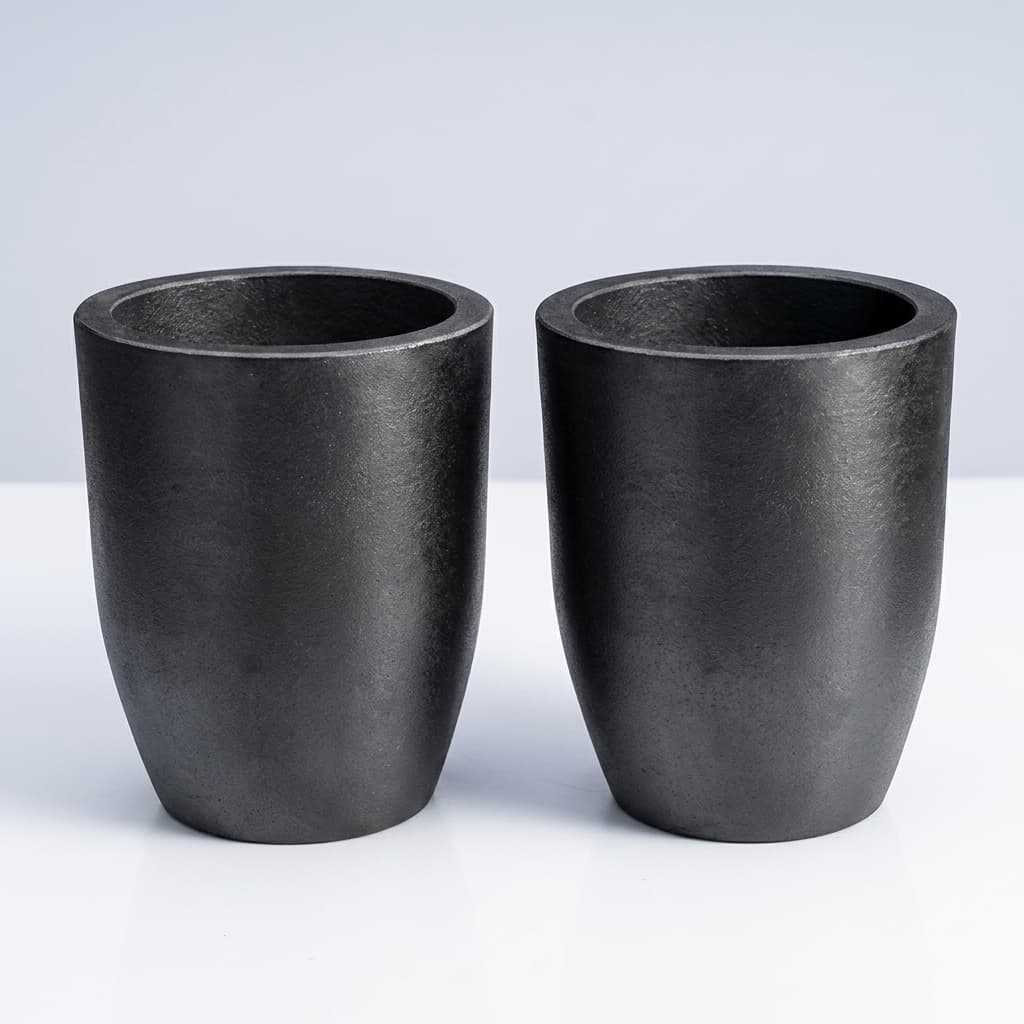
Evaluating Graphite Crucible Porosity and Density for SiC PVT Growth
Use density and porosity limits to qualify SiC PVT graphite crucibles, control vapor penetration, reduce impurity risk, and compare supplier datasheets.
For procurement teams and crystal growth engineers sourcing consumables for Silicon Carbide (SiC) Physical Vapor Transport (PVT), the graphite crucible specification sheet is a critical document. While dimensions and tolerances often receive the most scrutiny, two material properties—bulk density and porosity—fundamentally dictate the success or failure of a SiC boule.
At operating temperatures exceeding 2,200°C, the graphite crucible is not merely a passive container; it is an active participant in the chemical vapor environment. Its density determines its structural stability against thermal stress, while its open porosity governs vapor penetration, impurity trapping, and ultimately, the defect density (such as basal plane dislocations and micropipes) of the resulting SiC crystal.
This deep-dive engineering and procurement guide breaks down why standardizing on high-density isostatic graphite (typically >1.82 g/cm³) is essential for high-yield 150mm and 200mm SiC growth, and explores the nuanced role of porosity in advanced hot zone designs.
Published and scope note (July 26, 2026): This guide is written for global procurement, process engineering, and quality teams evaluating graphite crucible bodies, lids, susceptors, and selected vapor-management inserts for 150mm and 200mm SiC PVT growth. The density and porosity ranges below are RFQ screening targets, not universal furnace recipes; final acceptance limits must be qualified against your growth temperature profile, pressure window, source powder, coating route, hot-zone geometry, inspection method, and post-growth defect data.
If you are drafting an RFQ, pair this article with the SiC PVT Crucible requirements page before requesting supplier evidence for bulk density, open porosity, ash content, GDMS purity, CTE, and coating compatibility.
Key Takeaways for Procurement and Engineering
- Density is a Barrier: A bulk density exceeding 1.82 g/cm³ is generally required to prevent excessive vapor penetration, which causes crucible swelling, cracking, and premature failure.
- Porosity Traps Impurities: High open porosity allows metallic impurities (Fe, Ti, V) to reside within the graphite matrix. At PVT temperatures, these volatilize, contaminating the growth front and nucleating micropipes.
- The Porous Insert Paradox: While the crucible walls must be dense, advanced 200mm hot zones deliberately use porous graphite inserts inside the chamber to modulate the Si/C vapor flux and improve transport efficiency.
- TCO Implications: Lower density graphite may offer a lower upfront cost, but the resulting reduction in crystal yield and shorter crucible lifespan severely degrades the Total Cost of Ownership (TCO).
The Physics of Graphite Density in the PVT Environment
In the PVT process, SiC powder sublimates into Si, Si2C, and SiC2 vapor species, which travel along a thermal gradient to condense on a cooler seed crystal. This entire reaction is enclosed within a high-purity graphite crucible heated by induction or resistance coils.
Isostatic graphite is the material of choice because of its isotropic properties (uniform thermal expansion and conductivity in all directions) and its ability to withstand extreme temperatures. However, during the manufacturing of graphite—which involves mixing petroleum coke with pitch binder, baking, and graphitization—pores naturally form as volatile compounds escape.
The bulk density of the finished graphite (measured in g/cm³) is inversely proportional to its porosity. A typical high-grade semiconductor graphite will have a density between 1.80 g/cm³ and 1.92 g/cm³.
When a procurement team selects a crucible with a density of 1.75 g/cm³ instead of 1.85 g/cm³, they are accepting a significantly higher volume of voids within the material structure. At room temperature, this difference might only manifest as a slight change in weight or machinability. But at 2,300°C, under vacuum or low-pressure argon, those voids become active pathways for vapor and heat.
Thermal Conductivity and Gradient Stability
The thermal conductivity of graphite is heavily dependent on its density. Voids act as thermal insulators. In a lower-density crucible, the thermal resistance across the crucible wall is higher. To achieve the required internal sublimation temperature at the bottom of the crucible, the external heating elements must be driven to a higher power output.
This introduces two severe problems:
- Steeper Radial Gradients: The temperature drop from the outer wall to the inner wall is sharper, making it incredibly difficult to maintain the flat or slightly convex isotherms necessary for stable crystal growth.
- Thermal Stress: The massive temperature differential across the crucible wall induces mechanical stress. After multiple heating and cooling cycles, lower-density crucibles are far more prone to micro-cracking and catastrophic fracture.
Vapor Penetration and Crucible Swelling
One of the most destructive phenomena in SiC PVT is vapor penetration. The Si and Si-C vapor species generated by the sublimating powder do not exclusively travel upwards to the seed; they also diffuse outward toward the crucible walls.
If the graphite has high open porosity, these reactive vapors penetrate deep into the crucible wall matrix. Once inside, they react with the cooler carbon away from the inner surface, condensing and forming solid silicon carbide within the graphite pores.
Because SiC has a different coefficient of thermal expansion (CTE) and a larger molar volume than graphite, this internal deposition exerts immense outward mechanical pressure on the crucible wall. This is known as "crucible swelling" or "SiC corrosion."
The Swelling Mechanism
Vapor Penetration and Crucible Swelling Dynamics
In high-density crucibles, vapor penetration is localized to the immediate surface. In porous crucibles, deep penetration leads to internal SiC formation, causing swelling and cracking.
Over consecutive growth runs, a swollen crucible loses its geometric tolerances. Lids become seized to the main body (thread seizure), making it impossible to extract the boule without destroying the crucible. Furthermore, the localized swelling alters the distance between the crucible and the induction coils, irrevocably changing the thermal field and destroying process repeatability.
Mitigating Penetration with TaC Coatings
To combat vapor penetration, many high-end applications now specify Tantalum Carbide (TaC) or dense SiC coatings on the inner surfaces of the crucible. However, coatings are only as good as the substrate they adhere to. If the underlying graphite is too porous or has a poorly matched CTE, the coating will blister, delaminate, and fail prematurely. A high-density base material is mandatory for a reliable coating application.
Porosity as an Impurity Trap: The Root of Micropipes
Beyond structural integrity, porosity plays a direct role in the chemical purity of the SiC crystal. Semiconductor-grade graphite undergoes extreme halogen purification to achieve ash contents below 5 ppm (parts per million).
However, open pores in the graphite act as microscopic reservoirs that can trap environmental contaminants during machining, packaging, transport, and handling. More insidiously, these pores can harbor residual metallic impurities (such as Iron, Titanium, Vanadium, and Boron) that were not fully eradicated during the purification bake.
The Contamination Cycle
During the heat-up phase of PVT growth, the crucible temperature surpasses 2,000°C. At these temperatures, trapped metallic impurities volatilize. Because the PVT chamber operates under a directed vapor flow toward the cooler seed, these metallic vapors are carried directly to the growth interface.
When a metallic impurity incorporates into the growing SiC lattice, it disrupts the strict stacking sequence. This disruption creates massive lattice strain, which the crystal relieves by forming a deep-level defect. Often, this results in the nucleation of a micropipe—a hollow tubular defect that propagates through the entire boule. A single micropipe in an active device area will cause catastrophic electrical breakdown, destroying the yield of that specific chip.
Impact Comparison: High Density vs. Low Density Crucibles
| Metric | High Density (>1.82 g/cm³) | Low Density (<1.75 g/cm³) | Impact on PVT Outcome |
|---|---|---|---|
| Open Porosity | Low (<10%) | High (>15%) | Determines vapor penetration depth and impurity trapping. |
| Thermal Conductivity | High, Stable | Lower, prone to degradation | High density maintains stable thermal gradients across runs. |
| Mechanical Strength | Excellent (Compressive & Flexural) | Inferior | High density withstands thermal cycling and cooling stresses without cracking. |
| TaC Coating Adhesion | Excellent | Poor (Blistering risk) | Coatings require a dense substrate to prevent localized gas expansion underneath. |
| Average Lifespan | 5 to 10+ runs (depending on process) | 1 to 3 runs | High density lowers consumable TCO despite higher initial cost. |
| Defect Contribution | Minimal | High (Micropipe nucleation) | Low density releases trapped impurities, degrading crystal yield. |
The Porous Insert Paradox: Deliberate Use of Porosity
It is crucial for engineers and buyers to distinguish between the crucible wall (which must be dense) and internal growth components (which may deliberately utilize porosity).
In advanced 200mm (8-inch) SiC growth, managing the massive volume of vapor transport is incredibly complex. The source powder surface area is vast, and standard sublimation can lead to erratic vapor flux, causing uneven growth rates and polytype inclusions (e.g., 15R instead of 4H).
To solve this, some state-of-the-art hot zone designs introduce porous graphite inserts—such as plates, cylinders, or filters—placed directly above the SiC source powder.
How Porous Inserts Work
These inserts are manufactured from specially engineered graphite with precisely controlled open porosity (often 20% to 40%). They act as a vapor flow homogenizer. As the sublimated Si and Si-C gases pass through the porous plate, the flow is diffused and normalized. This creates a highly uniform vapor delivery across the entire face of the 8-inch seed crystal.
Furthermore, these porous inserts can act as secondary impurity filters, selectively trapping certain heavy metal vapors before they reach the growth front.
Procurement Note: When an engineering drawing calls for "porous graphite," verify exactly which component it refers to. A porous crucible wall is a recipe for disaster; a porous internal baffle plate is a highly engineered yield-enhancement tool.
Procurement Checklist for SiC PVT Graphite
When evaluating supplier datasheets for SiC hot zone consumables, use this checklist to ensure material properties align with high-yield requirements:
- Verify Bulk Density: Ensure the main crucible body, lid, and susceptor have a minimum bulk density of 1.82 g/cm³ (1.85+ is preferred for 200mm).
- Check Ash Content: Purity is non-negotiable. Require GDMS (Glow Discharge Mass Spectrometry) certification proving total ash content is below 5 ppm (ideally <2 ppm).
- Match the CTE: The Coefficient of Thermal Expansion (CTE) of the graphite must be closely matched to the SiC crystal to prevent severe stress fracturing during the cool-down phase.
- Specify Open vs. Closed Porosity: If a data sheet lists porosity, clarify if it is open (interconnected) or closed. Open porosity governs vapor penetration.
- Assess Coating Compatibility: If you intend to use TaC or SiC coatings, discuss substrate compatibility with your vendor. Demand a high-density, ultra-smooth machined finish to ensure coating adherence.
- Distinguish Component Roles: Ensure that RFQs clearly separate the material specs for structural components (dense) versus vapor management inserts (porous).
Frequently Asked Questions (FAQ)
Q: Can we compensate for a lower-density crucible by using a thicker wall design? A: No. While a thicker wall might superficially improve structural strength, it increases thermal resistance, forcing you to run the external coils hotter. This exacerbates radial thermal gradients and does not solve the fundamental issue of vapor penetration into the porous matrix.
Q: How does crucible density affect the carbon-to-silicon (C/Si) ratio during growth? A: PVT growth is typically carbon-limited. The SiC powder initially releases silicon-rich vapor, and the system relies on the graphite crucible walls to provide supplementary carbon. A highly porous crucible can react unpredictably, absorbing silicon vapor (crucible etching) and releasing variable amounts of carbon, making the C/Si ratio unstable and increasing the risk of carbon inclusions in the crystal.
Q: Is extruded graphite acceptable for SiC PVT? A: Generally, no. Extruded graphite is highly anisotropic, meaning its thermal expansion and conductivity differ wildly depending on the direction of extrusion (with the grain vs. against the grain). This leads to asymmetrical thermal fields and high thermal stress. Always specify isostatic (isotropic) graphite for PVT hot zones.
Q: How do I know if my crucible failure was caused by vapor penetration? A: Look for localized swelling, blistering, or flaking on the inner walls. In severe cases, the crucible will crack vertically, or the threads connecting the lid to the body will become seized and require destructive removal. Cross-sectional SEM analysis will often reveal SiC deposition deep within the graphite pores.
Conclusion
In the relentless pursuit of zero-defect, high-yield SiC crystal growth, the graphite crucible is as critical as the seed crystal itself. Treating graphite as a generic consumable is a costly mistake. By mandating strict bulk density thresholds (>1.82 g/cm³), minimizing open porosity in structural walls, and carefully engineering porous internal inserts, manufacturers can stabilize thermal gradients, suppress micropipe nucleation, and significantly lower their Total Cost of Ownership.
When scaling to 8-inch production, these material parameters become unforgiving. Partnering with a supplier who understands the intricate physics of the PVT environment is essential.
Need to upgrade your hot zone for higher 200mm yields? Explore our SiC PVT Crystal Growth Solutions or contact our engineering team to discuss custom, high-density graphite crucibles optimized for your specific furnace geometry.
References & Further Reading
Author

Categories
More Posts
Managing Silicon Vapor Leakage in SiC PVT: Sealing Strategies for Graphite Crucibles
Use this RFQ guide to manage silicon vapor leakage in SiC PVT graphite crucibles with density, thread tolerance, labyrinth seal, and TaC coating checks.
Isostatic Graphite Grain Size for SiC Crucibles: Balancing Machinability, Strength, and Yield
Evaluate isostatic graphite grain size for SiC PVT crucibles, from CNC thread integrity to TaC coating fit, thermal shock trade-offs, and RFQ checks.
Graphite Crucible Lifecycle Management: Balancing TCO and Yield in SiC PVT
Graphite crucible lifecycle management framework for SiC PVT teams balancing TCO, replacement timing, power drift, and yield risk in production plants.