
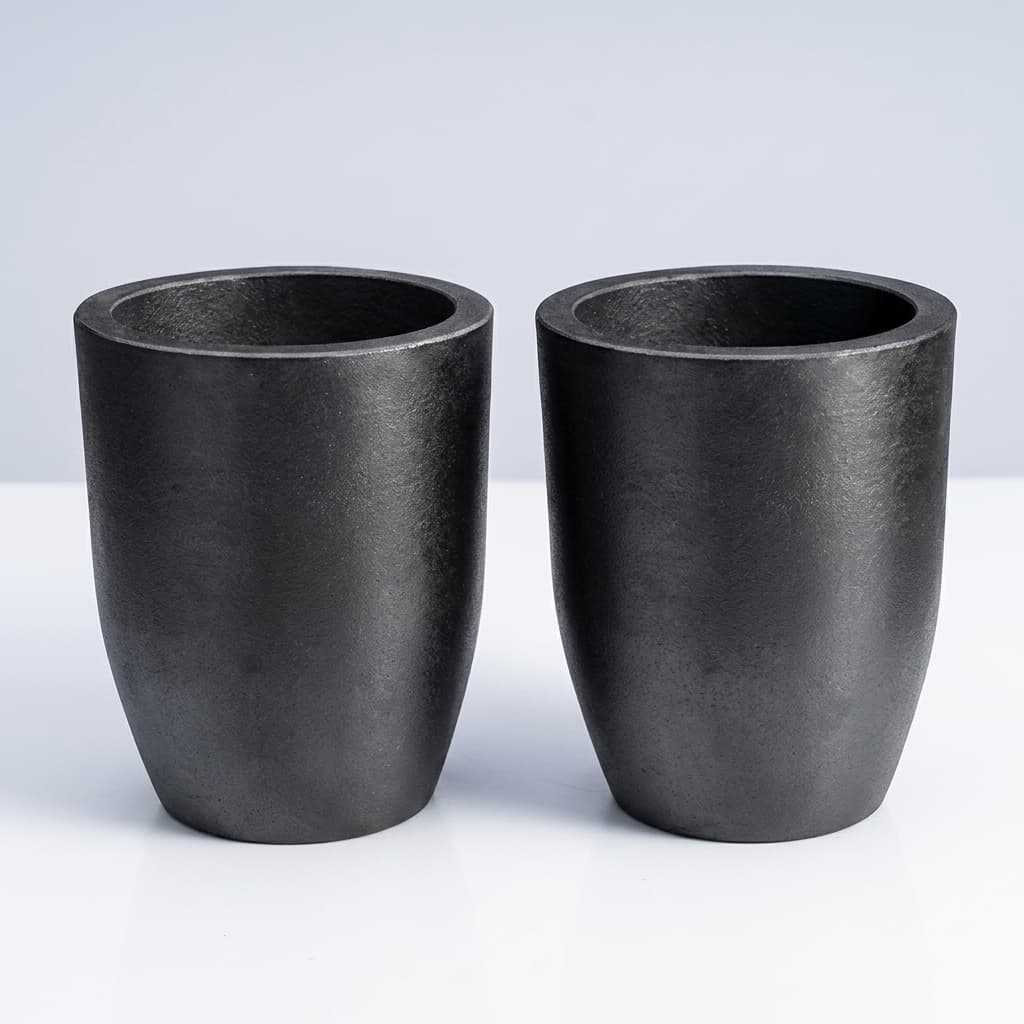
Isostatic Graphite Grain Size for SiC Crucibles: Balancing Machinability, Strength, and Yield
Evaluate isostatic graphite grain size for SiC PVT crucibles, from CNC thread integrity to TaC coating fit, thermal shock trade-offs, and RFQ checks.
As the silicon carbide (SiC) semiconductor industry accelerates its transition from 150mm (6-inch) to 200mm (8-inch) wafer formats, the physical constraints placed on the Physical Vapor Transport (PVT) growth process have become increasingly severe. At temperatures exceeding 2,300°C, the graphite hot zone—comprising the crucible, lid, seed holder, and insulation felt—must maintain absolute dimensional stability, chemical purity, and thermal consistency over a growth cycle that can last up to a week.
While procurement teams and crystal growth engineers rigorously scrutinize purity levels (often demanding <5 ppm or <1 ppm ash content via GDMS) and bulk density, one critical material specification is frequently misunderstood or overlooked during the RFQ process: isostatic graphite grain size (particle size).
When reviewing a graphite material data sheet from a supplier, buyers will typically see specifications listed as "Maximum Grain Size" or "Average Particle Size," with values generally ranging from 5 µm to 20 µm. To the untrained eye, the difference between a 10 µm and a 20 µm grain size might seem trivial. However, in the high-stakes environment of SiC sublimation, this microscopic parameter fundamentally dictates the crucible's CNC machinability, its susceptibility to catastrophic thermal shock, the quality of the TaC (Tantalum Carbide) coating adhesion, and ultimately, the defect density (such as carbon inclusions and micropipes) within the final SiC boule.
This comprehensive guide is designed for B2B buyers, procurement teams, and equipment engineers. It unpacks the material science behind isostatic graphite grain size, defines the engineering application boundaries, and provides a structured framework for selecting the optimal graphite grade for advanced SiC PVT crystal growth.
Scope and limits (July 27, 2026): This guide applies to high-purity isostatic graphite crucible bodies, lids, seed holders, and selected hot-zone parts for 150mm and 200mm SiC PVT growth. It is an RFQ and specification framework, not a universal furnace recipe; final grain-size limits must be qualified against furnace geometry, pressure and temperature profile, source powder, coating process, machining tolerance, inspection method, and post-growth defect data. If you are drafting a supplier package, align this article with the SiC PVT Crucible requirements page and the SiC PVT Crystal Growth Solutions checklist before requesting PSD, purity, porosity, and TaC compatibility evidence.
1. What is Isostatic Graphite Grain Size?
Isostatic graphite is manufactured through a specialized powder metallurgy process. High-quality petroleum coke or pitch coke is milled into a fine powder, mixed with a carbonaceous binder (typically coal tar pitch), and then compacted using Cold Isostatic Pressing (CIP). The CIP process applies equal hydrostatic pressure from all directions, resulting in a block of graphite that exhibits isotropic (uniform in all directions) electrical, thermal, and mechanical properties.
Before the compaction stage, the raw coke is milled and sieved. The grain size refers to the physical dimensions of these constituent carbon particles.
- Average Particle Size (d50): The median diameter of the particles in the mix.
- Maximum Grain Size: The absolute largest particle allowed in the raw material matrix before pressing.
In the context of SiC PVT crucibles, "fine grain" generally refers to a maximum grain size of 15 µm to 20 µm, while "ultra-fine grain" refers to materials with a maximum grain size of <10 µm (often in the 4 µm to 8 µm range). Because finer grains pack more closely together, decreasing the grain size inherently affects the material's bulk density, porosity, flexural strength, and coefficient of thermal expansion (CTE).
2. The Mechanics of CNC Machining and Thread Integrity
One of the most immediate and tangible impacts of graphite grain size is its effect on CNC (Computer Numerical Control) machinability. SiC crucibles are not simple cups; they are complex, high-precision vessels. The crucible lid, in particular, requires highly intricate machining, including precision threads for sealing, mounting holes for the SiC seed crystal, and exhaust ports for gas flow control.
Graphite is a brittle, abrasive material. When a CNC cutting tool passes through the material, it does not shear the graphite like it would metal; rather, it plucks or fractures the particles away.
If the graphite has a larger maximum grain size (e.g., 20 µm), the cutting tool is more likely to dislodge entire macroscopic grains at the apex of thin geometries. In the context of threaded lids, this results in "chipped" or "ragged" threads.
The consequence in the PVT furnace:
- Vapor Leakage: Chipped threads fail to create a hermetic seal. At 2,300°C, the supersaturated silicon and carbon vapor will escape through the thread gaps. This alters the internal C/Si ratio, destabilizes the growth front, and degrades the thermal insulation felt surrounding the crucible.
- Thread Seizure: During the cool-down phase, SiC vapor that has condensed within the chipped thread gaps will solidify, effectively welding the lid to the crucible. When operators attempt to unscrew the lid post-growth, the graphite tears, destroying the crucible and potentially damaging the SiC boule.
Ultra-fine grain graphite (<10 µm) supports vastly superior edge retention and surface finish, allowing for the machining of extremely fine pitch threads and tight-tolerance seed mounting structures without micro-fracturing.
3. Thermal Shock Resistance and CTE: The Engineering Trade-off
If finer grains yield better machinability and tighter seals, why not exclusively specify the absolute finest grain graphite available (e.g., 1 µm)? The answer lies in fracture mechanics and thermal shock.
SiC PVT growth involves aggressive thermal cycles. The crucible must survive rapid heating to >2,000°C and a subsequent cooling phase. During these transitions, temperature gradients induce severe mechanical stress.
- Flexural Strength: Finer grain graphites generally exhibit higher compressive and flexural strength. The tightly packed matrix has fewer large structural voids.
- Crack Propagation: Paradoxically, while fine-grain graphite is stronger, it can be more brittle. When a micro-crack initiates due to thermal stress, a highly homogenous, ultra-fine matrix offers very little resistance to crack propagation. The crack zips straight through the material.
- The "Pinning" Effect of Larger Grains: Graphite with slightly larger grains (15-20 µm) often has better thermal shock resistance. The larger particles act as physical barriers that deflect or blunt propagating micro-cracks, absorbing energy and preventing catastrophic failure of the crucible wall.
The 8-inch Scaling Challenge: As crucible diameters expand to accommodate 200mm boules, the wall thickness must increase, and the total thermal mass grows exponentially. This exacerbates radial thermal gradients and amplifies thermal stress. Therefore, engineers must strike a delicate balance: the grain must be fine enough to hold tight thread tolerances for the lid, but the bulk crucible body must retain enough thermal shock resistance to survive the 8-inch cooling cycle without fracturing.
4. Porosity, Permeability, and TaC Coating Adhesion
Isostatic graphite is inherently porous, typically possessing an open porosity of 8% to 15%. The grain size directly dictates the pore size distribution.
Larger grains naturally pack with larger interstitial voids, leading to larger average pore diameters. Finer grains create a labyrinth of much smaller, tighter pores. This impacts two critical aspects of crucible performance:
- SiC Vapor Permeability: In uncoated crucibles, smaller pore sizes (driven by ultra-fine grains) act as a more effective physical barrier against the diffusion of silicon vapor into the crucible walls. This slows the rate at which the crucible degrades (graphitization/silicidation) and helps maintain stable stoichiometry in the growth chamber.
- TaC Coating Adhesion: To extend crucible life and block vapor penetration completely, many 6-inch and 8-inch processes now utilize Tantalum Carbide (TaC) coated graphite. Chemical Vapor Deposition (CVD) TaC coatings require a specific surface roughness and pore structure to achieve mechanical interlocking (adhesion) with the graphite substrate. If the grain size is too large, the TaC coating may fail to bridge the large surface pores, leading to pinholes. Conversely, if the pores are too small, the TaC gases cannot penetrate the surface to create "roots," resulting in delamination (peeling) of the coating at 2,300°C due to CTE mismatch. A highly uniform, fine grain structure is critical for yielding a dense, blister-free TaC coating.
5. Graphite Dusting and Carbon Inclusions in SiC
For crystal growth engineers, "graphite dusting" is a nightmare scenario. If a crucible lid has a coarse grain structure, thermal cycling and the abrasive nature of the SiC vapor can cause loosely bound graphite particles to detach from the lid's surface.
These macro-particles fall directly onto the growing SiC boule. When a carbon particle lands on the convex growth front, it disrupts the localized step-flow growth mechanism. The SiC lattice is forced to grow over or around the particle, instantly nucleating severe crystallographic defects, including:
- Micropipes (MPs)
- Basal Plane Dislocations (BPDs)
- Threading Screw Dislocations (TSDs)
- Polytype inclusions (e.g., forming 15R within a 4H matrix)
Ultra-fine grain graphite significantly mitigates dusting. The particles are smaller and more tightly bound by the carbonized pitch matrix, resulting in a cleaner growth environment and a higher yield of prime-grade SiC wafers.
6. Standard Fine vs. Ultra-Fine Grain: A Comparison
The following table summarizes the comparative attributes of standard and ultra-fine grain isostatic graphite in the context of SiC PVT.
| Metric / Attribute | Standard Fine Grain (15 - 20 µm) | Ultra-Fine Grain (< 10 µm) | Impact on SiC PVT Process / Buyer Decision |
|---|---|---|---|
| Machinability (Threads) | Fair to Good (Risk of chipping) | Excellent (Sharp, clean profiles) | Determines lid sealing and vapor leakage. Critical for complex crucible lids. |
| Surface Finish | Moderate roughness | High smoothness | Affects TaC coating adhesion and dust generation. |
| Pore Size | Larger average pore diameter | Micro-porous | Influences vapor permeability and crucible degradation rate. |
| Thermal Shock Resistance | Excellent (Deflects cracks) | Moderate to Good (More brittle) | Dictates survivability during 8-inch cool-down cycles. |
| Mechanical Strength | High | Very High | Supports thinner wall designs, improving induction efficiency. |
| Defect Yield Impact | Higher risk of carbon dusting | Minimal dusting | Directly impacts the reduction of Micropipes (MPs) and basal plane dislocations. |
| Typical Cost & Lead Time | Baseline cost, standard lead time | +20% to +40% Premium, longer lead time | Requires longer milling, more complex pressing profiles, and stricter purification. |
7. Procurement & Engineering Checklist: Specifying Grain Size
When issuing an RFQ or auditing a high-purity graphite supplier for SiC crucibles, procurement teams and engineers should use the following checklist to ensure the material meets production requirements:
- Verify Maximum Grain vs. Average Particle Size: Ensure you are reading the data sheet correctly. A supplier claiming "10 µm graphite" must clarify if this is the maximum allowable grain or the d50 average. For critical lid threads, maximum grain size is the limiting factor.
- Request Batch-to-Batch Particle Size Distribution (PSD) Data: Ask the supplier for historical PSD data across multiple production lots. A tight PSD curve guarantees consistent machining yields.
- Match Grain Size to Component Function (Hybrid Sourcing): Consider using standard fine grain for the bulk crucible body (for better thermal shock resistance) and ultra-fine grain for the lid and seed holder (for thread precision and zero dusting).
- Evaluate TaC Coating Compatibility: If you intend to apply a TaC coating, consult with both your graphite supplier and coating vendor to align the graphite's average pore size with the CVD coating parameters.
- Assess Machining Tolerances on Engineering Drawings: Specify the required thread class and surface roughness (Ra) on your drawings. Force the supplier to confirm that their chosen graphite grade can physically achieve these tolerances without micro-fracturing.
- Audit the Milling & Purification Process: For ultra-fine graphite, understand the supplier's milling environment. Finer milling introduces a higher risk of metallic contamination (e.g., iron or copper), requiring supplier verification of rigorous halogen purification cycles.
- Define Acceptance Criteria for Chipping: Establish clear, quantifiable acceptance limits for thread chipping during incoming Quality Control (QC). Provide optical microscopy examples of "pass" and "fail" thread apexes.
8. FAQ: Grain Size in SiC Crucible Procurement
Q: Can we use a 20 µm grain size for an 8-inch SiC crucible to save money?
A: While 20 µm graphite is cheaper and offers good thermal shock resistance for the main crucible body, using it for a complex threaded lid will likely result in vapor leaks and thread seizure. A hybrid approach—using 20 µm for the main body and upgrading the lid assembly to a 10 µm grade—is generally recommended for 200mm yields to balance cost and performance.
Q: Does finer grain size mean higher purity (e.g., lower Ash content)?
A: No. Grain size and chemical purity are independent variables. However, manufacturing ultra-fine powder inherently increases the surface area exposed to metallic contaminants during milling. Therefore, ultra-fine graphite requires more aggressive high-temperature halogen purification (often exceeding standard timelines) to achieve the <5 ppm GDMS standard required for SiC.
Q: Why is my TaC coating blistering on a new batch of fine-grain crucibles?
A: Blistering is often caused by a mismatch between the CVD coating process parameters and the graphite's pore structure. If the new batch of graphite has a significantly different particle size distribution, the pore size may be too small for the TaC precursor gases to infiltrate and form mechanical "roots", leading to poor adhesion and delamination at high temperatures.
Q: How do we verify the actual grain size from our supplier before mass production?
A: Request a complete Particle Size Distribution (PSD) report for the specific graphite block (not just typical data). You can also perform a destructive cross-section analysis and scanning electron microscopy (SEM) on a sample coupon to visually verify the grain morphology and ensure it aligns with the stated maximum grain size.
9. Conclusion
Isostatic graphite grain size is not merely a line item on a material certificate; it is a fundamental driver of SiC PVT crystal yield. As the industry scales to 200mm, the margin for error in hot zone design vanishes. Procurement teams must move beyond generic "high purity" requests and actively collaborate with graphite manufacturers to specify grain structures that balance CNC machinability, thermal shock resistance, and defect reduction.
By understanding the mechanics of particle size, engineers can eliminate vapor leaks, prevent crucible seizure, drastically reduce carbon inclusions, and stabilize the C/Si ratio—ultimately driving down the total cost of ownership per wafer.
Looking to optimize your 6-inch or 8-inch SiC hot zone?
Our engineering team provides consultative design and material selection for high-purity, precision-machined graphite components. Explore our SiC PVT Crystal Growth Solutions or send furnace drawings and acceptance criteria through the contact page for a custom material evaluation tailored to your specific furnace conditions.
10. Sources and References
- SGL Carbon. "SIGRAFINE Isostatic Graphites." Overview of ultra-fine grain isostatic graphite material properties. Available at: https://www.sglcarbon.com/en/markets-solutions/material/sigrafine-isostatic-graphite/
- SGL Carbon. "SIGRAFINE ISO Graphite for Electronic Applications." Technical data sheet comparing electronic-application isostatic graphite grades by average grain size, density, porosity, permeability, and strength. Available at: https://www.sglcarbon.com/pdf/SGL-TDS-SIGRAFINE-ISO-for-Electronic-Applications-EN.pdf
- Mersen. "Isostatic & Extruded Graphite." High-temperature graphite material overview covering thermal shock resistance, mechanical stability, and low CTE. Available at: https://www.mersen.com/en/products/isostatic-graphite-extruded-graphite
- Entegris. "Semiconductor Graphite Grades." Semiconductor graphite grade selection segmented by 1, 5, and 10 micron grain sizes. Available at: https://www.entegris.com/shop/en/USD/Products/Specialty-Materials/Premium-Graphite/Semiconductor-Graphite-Grades/c/SemiconductorGraphiteGrades
- Wellmann, P. J. (2018). "Power Electronic Semiconductor Materials for Automotive and Energy Saving Applications - SiC, GaN, Ga2O3, and Diamond." Zeitschrift für anorganische und allgemeine Chemie. DOI: https://doi.org/10.1002/zaac.201800282
Author

Categories
More Posts
Managing Silicon Vapor Leakage in SiC PVT: Sealing Strategies for Graphite Crucibles
Use this RFQ guide to manage silicon vapor leakage in SiC PVT graphite crucibles with density, thread tolerance, labyrinth seal, and TaC coating checks.
Evaluating Graphite Crucible Porosity and Density for SiC PVT Growth
Use density and porosity limits to qualify SiC PVT graphite crucibles, control vapor penetration, reduce impurity risk, and compare supplier datasheets.
Graphite Crucible Lifecycle Management: Balancing TCO and Yield in SiC PVT
Graphite crucible lifecycle management framework for SiC PVT teams balancing TCO, replacement timing, power drift, and yield risk in production plants.